

While the pandemic has helped all motorcycle sales in 2021 and in 2020 off-road models saw the greatest growth. And dirt bikes are among the most popular of these off-pavement motorcycleS. Especially since they do excellent companion on motorhome trips to national and state parks. Of course, some drivers want to get more miles out of their machines and start driving on paved, uh, roads. And if you are one of them, the first thing you should do is make sure your dirt bike is street legal unless you want to deal with unpleasant consequences.
There is more than one type of dirt bike
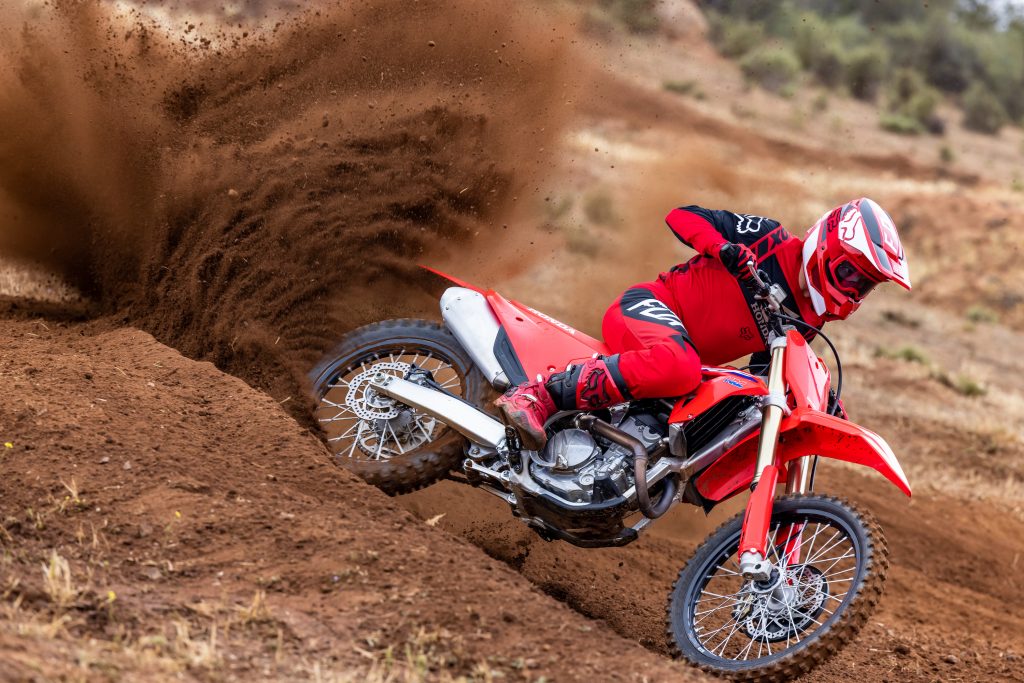
Before delving into street legal status, the first thing to understand is that all non-dirt bikes are created equal. And we’re not talking about things like displacement, two-stroke vs. four-stroke or Petrol vs. electric. No, ‘dirt bike’ technically refers to a whole family of off-road motorcycles, Bike world explained.
While there are several types of Motorcycles that can go off-road, Dirt bikes are the off-road focused ones. However, that doesn’t mean that all dirt bikes are equally good at all activities. Think of them as knives, CW says. One motorcycle is like a steak knife, another more like a cleaver: Both are knives, but built for different tasks.
All dirt bikes follow the same basic formula: long-stroke suspension, knobby tires, light frames and one or two-cylinder engines. These features make maneuvering easier on off-road routes, which is why models like the Honda CRF250F are often referred to as “trail bikes”.
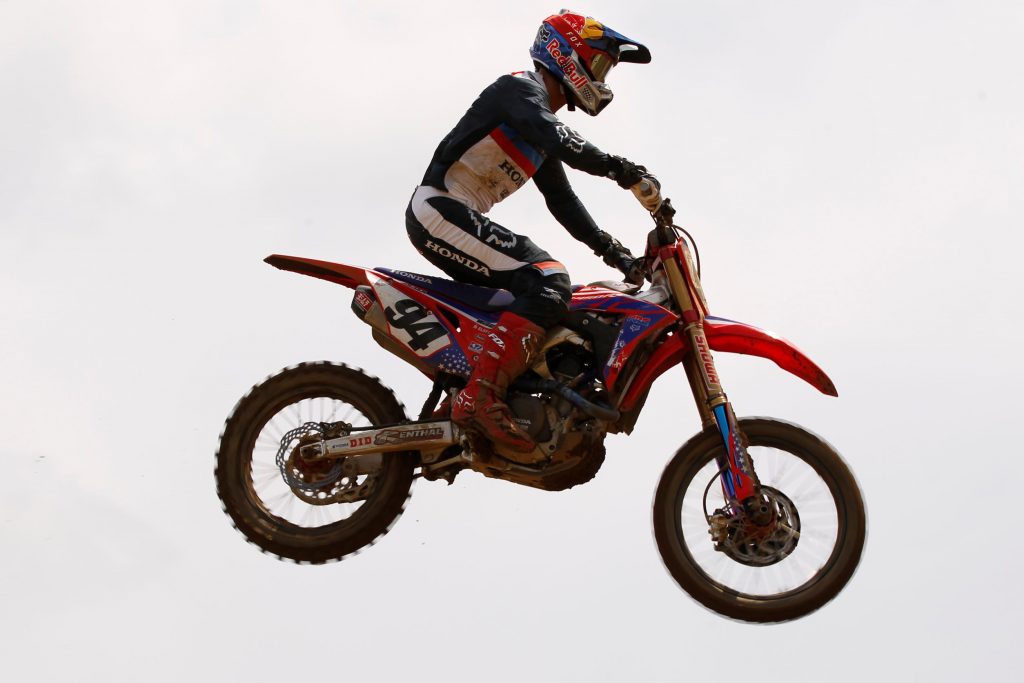
Trail bikes aren’t that extreme, though than motocross motorcycles. These are fully-fledged racing machines with even lighter frames, more suspension travel, tires with better grip and tight engines. For example, the Honda CRF250R is 36 pounds lighter than the CRF250F and has bigger brakes and about 50% more front suspension travel.
Enduro motorcycles are also dirt bikes and, like motocross bikes, are designed for racing. But while motocross races offer short distances with many jumps, enduro races take place over long distances in open, varied terrain. This makes enduro motorcycles beefier than trail or motocross bikes, RideApart explained, and often have larger engines. They also pack larger gas tanks and additional protection, such as Underrun protection and hand protection, as well as different suspension geometry. A case in point is the Honda CRF250X is nine pounds heavier than the CRF250F, but it can carry more fuel, has wider and thicker tires, and a kickstand.
Not all dirt bikes – including enduro bikes – are street legal
TIED TOGETHER: Vintage Honda Trail Bikes Channel Simple Pleasures
Some confuse enduro motorcycles with Dual sport and supermoto, RideApart says. While they share some similarities – long travel, thin body shape – they are not identical. For one, while Supermotos are similar to enduros, they are high-performance racing bikes. And second, while the latter two are street legal motorcycles, not all are enduro motorcycles.
This statement applies to all dirt bikes, regardless of whether they are trail, enduro or motocross models. Admittedly, since motocross bikes compete on closed, specially designed routes, they never have to be street-legal. and because two-stroke engines Still practical in motocross, it is unlikely that any of these motorcycles would ever pass the emissions.
TIED TOGETHER: Are ATVs street legal?
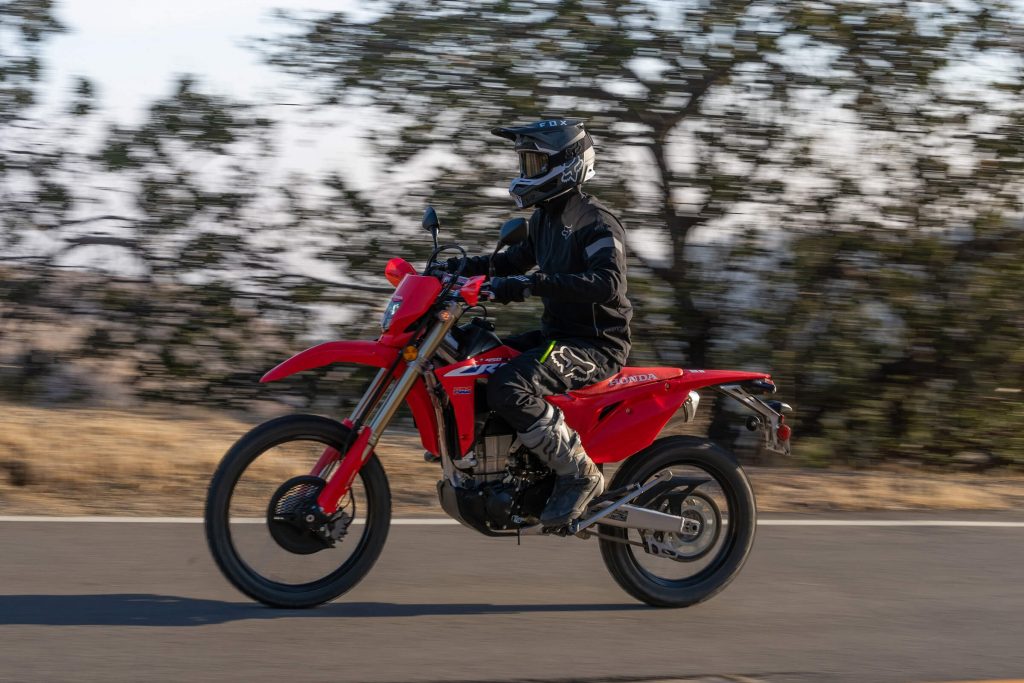
However, some enduro courses included sections on paved roads. Therefore, street legal is sometimes a requirement RevZilla mention, that. Also, trail bikes are designed for off-road riding, but you may need to ride on public roads to get to those trails. Some models, such as the Honda CRF450L, therefore contain concessions to the road traffic regulations.
But what makes one dirt bike to ride on the road and another illegal? First, it must be the powertrain Pass EPA test, and if the brand wants to sell it in California, CARB tests. So you need a catalytic converter and an exhaust that isn’t intrusive (and illegally) loud. Second, the dirt bike must have things like headlights, taillights, brake lights, horn, and a rear license plate bracket with lights. Plus, mirrors, turn signals and DOT approved tires.
What happens if you ride a non-street-legal off-road bike on the road?
TIED TOGETHER: Triumph Announces Shocking Plans to Build Motocross and Enduro Motorcycles
You can modify an off-highway trail or enduro dirt bike to be road legal. However, getting an off-road dirt bike street legal may also require updating the charging system, changing gear ratios, and installing an odometer, depending on your state’s DOT. Dirt Legal says. Then there is the installation of the other devices, the implementation of emission tests and the filling out of all the paperwork.
If that sounds like a lot of work, find a qualified shop. Or, if you’re looking for a new or used bike, consider getting a dual sport bike the Kawasaki KLR650 for a test drive. A light adventure bike like the Royal Enfield Himalayan can be another solid alternative.
What you don’t want to do is get your un-street legal dirt bike on the road. For one, you will Annoy local residents and other road users. In addition, local authorities can seize and destroy your drive. And emissions issues aside, it’s worth noting that these bikes don’t have lights, mirrors, or signals. This makes driving on public roads considerably more dangerous.
So before riding a dirt bike on-road and off-road, make sure it can do both first.
Follow other updates from MotorBiscuit on our Facebook site.
TIED TOGETHER: NYC Mayor Bill De Blasio crushes dozen of motorcycles and ATVs and has over 2,000 left to go

Comments are closed.